

Psoriatic arthritis often hides in plain sight. Here is what your rheumatologist looks for, and why catching it early matters.
August is Psoriasis Awareness Month, and while psoriasis usually gets attention for its visible skin symptoms, the joint disease that can follow it, psoriatic arthritis, often goes unrecognized for far longer.
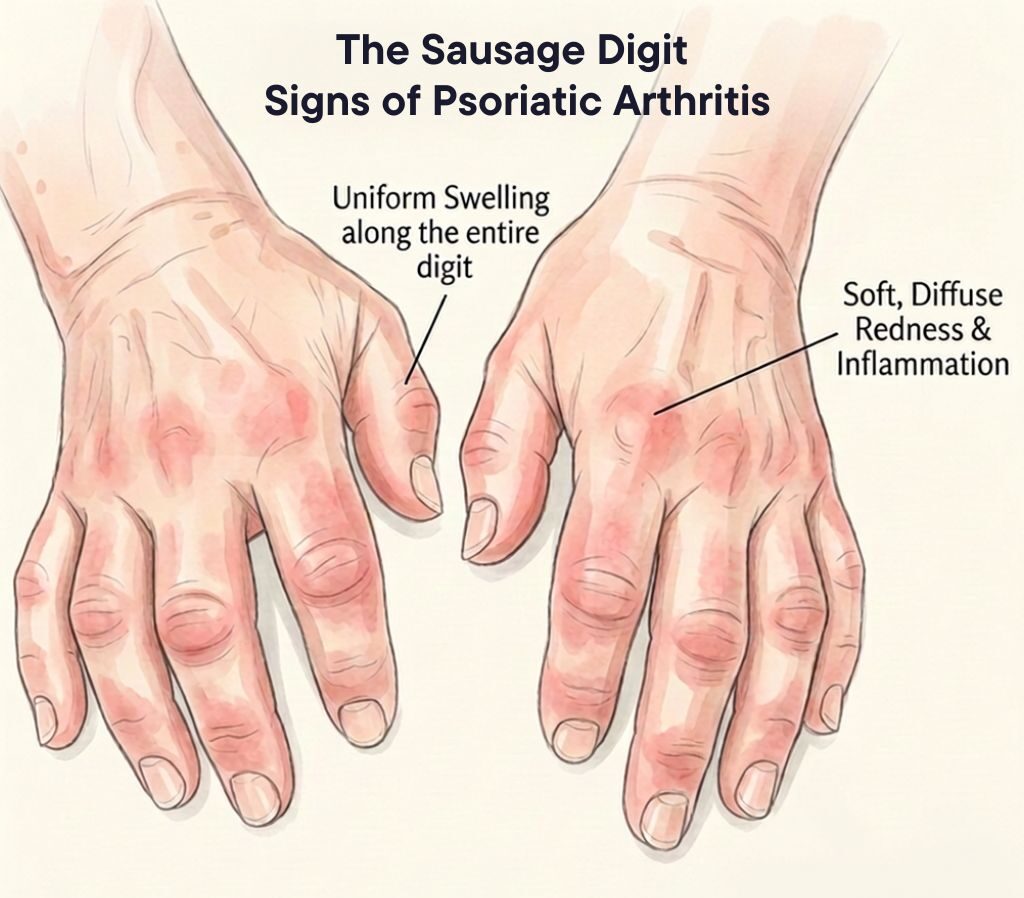
The sign that surprises people: One of the most distinctive signs of psoriatic arthritis is dactylitis, sometimes called a “sausage digit.” An entire finger or toe swells uniformly, not just a single joint. It looks different from the swelling seen in other types of arthritis, and it is often mistaken for an injury rather than a sign of inflammatory disease. If you notice this kind of swelling, especially alongside a psoriasis diagnosis, it is worth mentioning to your rheumatologist rather than waiting it out.
Why it is a rheumatology issue, not just a skin one: Up to 30 percent of people with psoriasis go on to develop psoriatic arthritis, often years after their skin symptoms start. Because early joint symptoms can be subtle, mild stiffness, occasional swelling, they are easy to dismiss. A rheumatologist is trained to recognize these signs and distinguish psoriatic arthritis from other joint conditions, which matters because the right treatment can slow or prevent permanent joint damage.
More than joints and skin: Psoriatic arthritis is part of a broader pattern of systemic inflammation, which is part of why rheumatologic care looks at the whole picture, not just the joints in front of us. Treatment plans often address inflammation more broadly, working alongside dermatology rather than in place of it.
What this means for you: If you have psoriasis and notice new joint pain, stiffness, or swelling, especially the sausage digit pattern, do not wait for it to resolve on its own. Early evaluation gives you the best chance at protecting your joints long term.
Have questions about psoriasis, joint pain, or psoriatic arthritis? Our rheumatology team at OAOC is here to help. Call (425) 453-0766 or email psr@overlakearthritis.com.